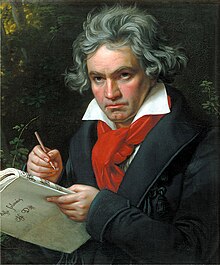
Ludwig van Beethoven
1770 – 1827
Beethoven shook his fist at fate. Going deaf as a composer — the cruelest irony imaginable — he responded by writing the most powerful music the world had ever heard. His works don't just move you; they transform you. Beethoven is the sound of the human spirit refusing to be defeated.
Essential Listening
Symphony No. 5 - First Movement
Da-da-da-DUM. Four notes that changed music forever. Beethoven called it 'fate knocking at the door.' The entire movement grows from this tiny seed into a force of nature. It's music as destiny — relentless, powerful, unstoppable.
Moonlight Sonata - First Movement
Beethoven's most famous piano piece opens with a whisper. The gentle arpeggios float beneath a melody of deep melancholy. Written as his hearing deteriorated, it captures a profound sadness that still resonates two centuries later.
Symphony No. 9 - Ode to Joy
The finale of Beethoven's last symphony introduces human voices into the orchestra for the first time. Completely deaf by this point, Beethoven conducted the premiere. The audience erupted, but he couldn't hear them — he had to be turned around to see their tears and applause.
Piano Concerto No. 5 'Emperor' - Second Movement
After the heroic drama of the first movement, Beethoven offers something almost sacred. This hymn-like Adagio floats in a world of peace and meditation. It's Beethoven at his most tender — proof that power isn't just about volume.
Symphony No. 7 - Second Movement
A processional of almost unbearable beauty. The simple rhythm — da da DUM da da — carries us through an emotional landscape of grief and nobility. Used in 'The King's Speech' and countless other films, it shows how Beethoven could move us with the simplest materials.
Discover Beethoven in These Journeys
Go Deeper with Classical Music
Love Beethoven? Get a free 7-day email guide exploring more incredible classical music.